


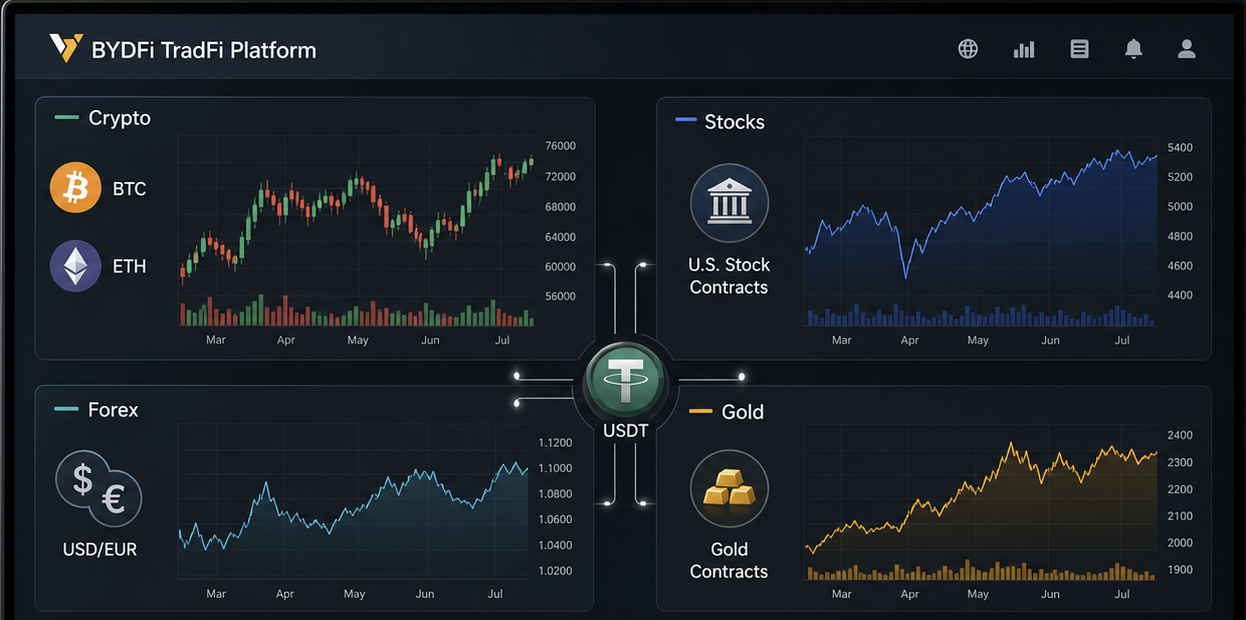
As crypto and traditional markets become more connected, traders increasingly want one place to follow digital assets, macro events, equities, forex, and commodities. The BYDFi TradFi platform brings tokenized traditional asset exposure into the same environment as crypto futures, copy trading, and automated trading tools. BYDFi has also introduced zero-fee campaigns for its TradFi Futures zone, allowing users to explore selected traditional asset contracts with lower trading costs during promotional periods. This creates a more flexible multi-asset crypto trading experience for users who want exposure to both digital assets and traditional market instruments.
What the BYDFi TradFi Platform Offers for Traditional Asset Trading
TradFi trading here means tokenized perpetual contracts representing traditional assets, including major U.S. stocks, forex instruments, and commodities such as gold, that settle in USDT and trade around the clock within a crypto-native futures interface.
The interface brings these products together with BYDFi’s broad crypto trading ecosystem on the same platform, letting traders move between asset classes without switching environments.
One important distinction: these are perpetual contracts, not direct equity ownership. No dividends. No shareholder voting rights. You get price exposure with crypto-native settlement and 24/7 availability. Crypto and global markets have increasingly moved in step with macro events such as rate decisions, earnings reports, and geopolitical shifts, making a unified trading interface for both asset classes genuinely useful.
Setting Up an Account and Placing Your First Trade
The account setup flow is designed to be straightforward, with app access available across iOS, Android, and APK in 22 languages.
For funding, the fiat gateway supports 100+ fiat currencies through One-Click Buy, bank transfer, credit/debit card, and P2P trading with providers including Banxa, Paybis, Transak, and Mercuryo.
The TradFi feature lives directly inside the futures trading interface – no separate app or account partition.
How to place a TradFi trade:
- Open the Futures tab and find the TradFi category – alongside spot categories like AI, Meme, DeFi, RWA, and DePIN.
- Pick an asset category, such as a major U.S. stock contract, forex instrument, or commodity such as gold.
- Choose leverage carefully, especially when testing unfamiliar asset classes such as tokenized stocks, forex, or commodities.
- Set position size and order type (limit or market).
- Confirm and monitor.
The 24/7 availability can also help users monitor market exposure outside regular exchange hours, though liquidity and price behavior may differ when underlying markets are closed.
Using Built-In Tools to Manage and Automate Strategy
Before committing real capital, you can practice with 50,000 USDT in simulated funds under real market conditions. Running a gold perpetual strategy in demo mode first makes sense for anyone new to tokenized commodities.
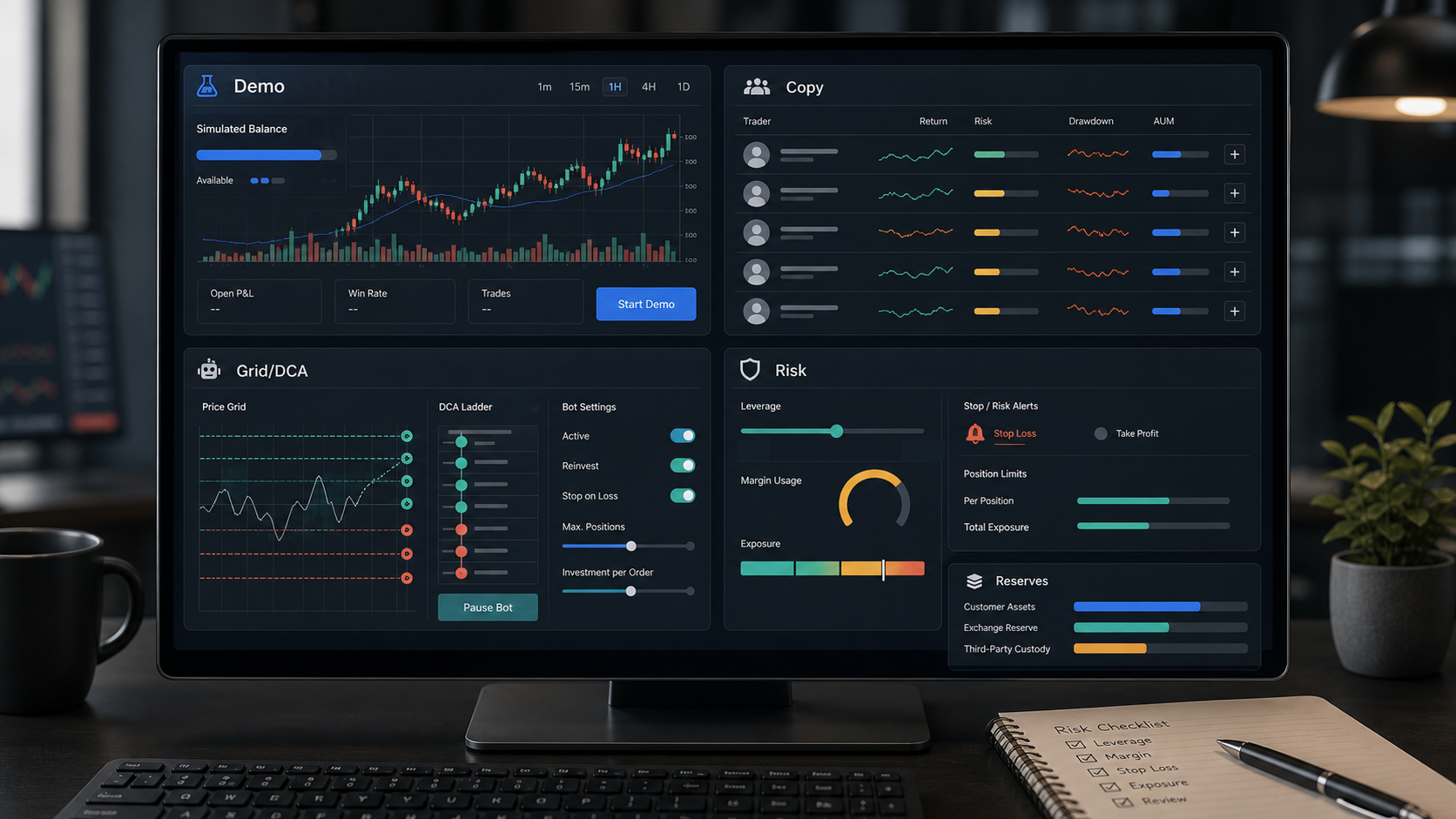 BYDFi copy trading lets users follow selected traders with one click, with a low entry threshold and flexible margin options. BYDFi has operated continuously since 2020 through multiple market cycles. It has also received third-party industry recognition and continues to expand its global presence through partnerships such as its multi-year collaboration with Newcastle United.
BYDFi also offers automated trading tools such as Spot Grid, Spot DCA, and Futures Grid, helping users test structured strategies across different market conditions. For users exploring TradFi-related strategies, Futures Grid may be useful for testing structured approaches in a 24/7 trading environment.
Common Mistakes When Trading TradFi Assets on Crypto Platforms
Assuming tokenized stocks equal stock ownership. They don’t – perpetual contracts with no dividends or shareholder rights.
Overleveraging unfamiliar asset classes. Forex and commodities can behave differently from crypto. Traders new to gold, forex, or tokenized stock contracts should use BYDFi leverage settings conservatively and avoid defaulting to higher multipliers familiar from crypto pairs.
Ignoring liquidity differences outside regular market hours. Tokenized stock contracts may trade 24/7, but underlying equity markets still close. Weekend or off-hours price action can behave differently, with different liquidity conditions and price behavior compared with regular market hours. BYDFi also publishes Proof of Reserves information, giving users an additional reference point when evaluating platform transparency.
Frequently Asked Questions
What is the TradFi platform?
A feature within BYDFi for trading tokenized perpetual contracts on traditional assets, including major U.S. stocks, forex instruments, and commodities such as gold, settled in USDT inside the existing futures interface.
How does tokenized stock trading differ from buying actual shares?
Tokenized contracts track underlying equity prices but don’t confer ownership, dividends, or voting rights. They’re perpetual contracts with crypto-native settlement and 24/7 availability.
Can I practice before trading real money?
Yes. A demo account with 50,000 USDT in simulated funds lets you test strategies under live market conditions at no cost.
What tools does BYDFi provide for risk management?
BYDFi offers demo trading, flexible leverage settings, copy trading, and automated bot tools to help users test strategies and manage exposure before committing larger capital.









Discussion about this post