

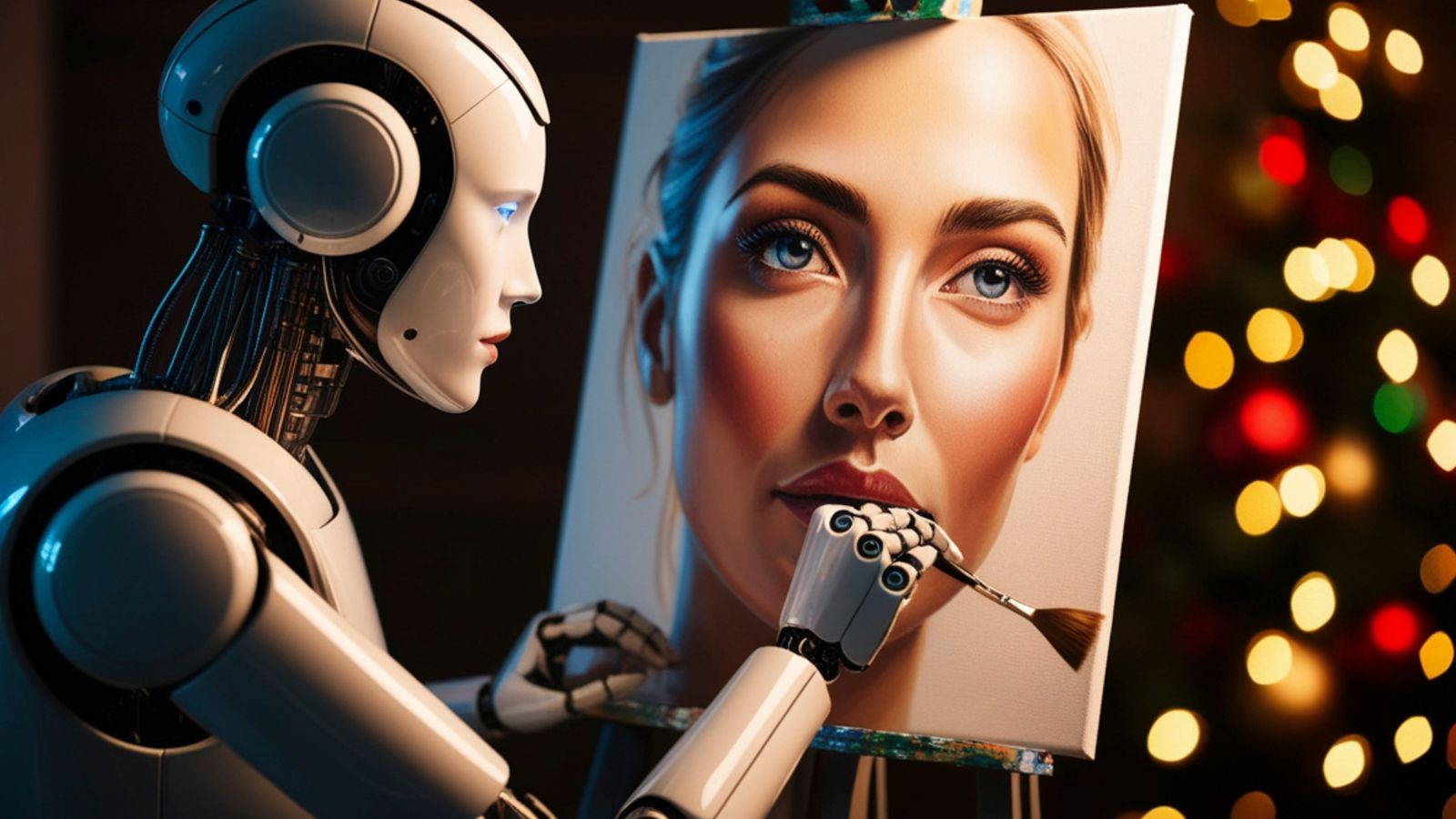
As the world counts down to the launch of the first-ever museum of artificial intelligence (AI) art, it’s impossible not to reflect on how dramatically the creative industry has evolved. Just about three decades ago, the world struggled with accepting the innovative image-altering features of Photoshop. Now, we’re set to witness 2D and 3D artistry curated exclusively by computers.
Last year, Refik Anadol, one of the world’s pioneering digital artists, announced that his museum, Dataland, would open in Los Angeles in 2025. The permanent space located at The Grand LA would feature art created by AI tools. Earlier in 2023, the world’s first AI art gallery also opened to the public in Amsterdam.
This rise of AI art has caused quite the stir. While some believe it’s the end of human creativity, others think artificial intelligence will democratize artistry and make exclusive talent accessible to the average person. Regardless of what you believe, there’s no doubt that AI is here to stay.
And with museums to showcase these pieces, there’s no limit to the ways AI will redefine our perception of creativity and art. In this article, we consider some of these implications and what they mean for artists and players in other industries.
Tracing the Roots of AI Art and Museums
Contrary to popular opinion, the story of AI art began long before generative tools like ChatGPT and Midjourney. Back in the 1960s, British artist Harold Cohen invented a computer program named AARON which would generate original drawings. More than fifty years down the line, machines began to learn artistic styles and replicate them to generate images.
In 2018, an AI-generated portrait, Edmond de Belamy sold at an auction for more than $400,000. And with GPTs like Dall-E, Midjourney CoPilot and more, AI art has proliferated greatly. Now, not only are museums showcasing digital art as part of their collection, but as you already know, there are dedicated centers where AI art takes center stage.
Implications of AI Museums for Artists
With AI museums now a mainstream institution, the implications for artists who had hitherto relied solely on human talent to develop art are enormous. Let’s consider some of the most pivotal ones below.
Democratization of Art Creation
Since AI tools can now create any form of art, especially museum-standard art, there’s no limit to the number of people who can wear the artist tag From those looking to enhance their skills using AI to complete novices, artificial intelligence enables a broad range of people to create art. Ultimately, this phenomenon will lead to greater competition and museums will only serve as a filter to spotlight the most unique pieces.
Ownership Concerns
In legal and ethical circles, the debate surrounding who owns AI-generated content is only about to become intense. Questions ranging from ownership and authorship of art will abound. Whether ownership lies with the AI tool, the prompt creator, or the software developer is a question for legislators in each country to decide.
Exposure and Innovation
The human mind is limitless. From the Mona Lisa to Michelangelo’s David, there’s more than enough proof to show that humans have what it takes to produce next-level art. Now imagine a combination of human talent and AI-assisted programming, and there really is no telling how incredible the resulting innovation will be.
Implications of AI Art for Industries
AI museums signal the emergence of artificial intelligence institutions, and the wave will quickly spread to industries that rely on artistic content. Some of these industries include marketing, gaming and online casinos, fashion, and media.
Below is a look at how these industries may potentially respond to AI-generated art.
- With AI, marketing companies can create high-quality visuals in record time, making it easier to develop hyper-personalized ads.
- Online game developers and no deposit casinos will adapt AI art for more immersive graphics and themedgames. Especially, no deposit casinos can offer customized interfaces in addition to other perks such as multiple bonuses, exciting gaming catalog and outstanding customer support.
- Fashion designs can collaborate with AI to develop bespoke patterns, prints and textures that will revolutionize the industry. AI art can also help with mockups and lookbooks, thereby helping accelerate the creative process.
- For the media industry, magazines, blogs and audio-visual media platforms are already ditching copyrighted images for AI-generated arts in some aspects of content creation such as social posts.
Bracing for Impact: How to Prepare for an Imminent AI Takeover
AI-generated art is a present force, and its impact will continue strongly. Ultimately, artists, companies, governments and everyone else would need to adapt or risk being left behind. On the bright side, AI cannot yet—and may be unable to—replace core skills like critical thinking and the emotional intelligence that comes with the creative process.
Thus, in adapting to AI, it is essential to treat it as a collaborative tool that must be integrated ethically. Finally, the response to innovation should be readiness not resistance. So, it is important that artists and non-artists alike stay up to date with trends and ensure that the AI tools used contribute positively to humanity’s progress.





Discussion about this post