


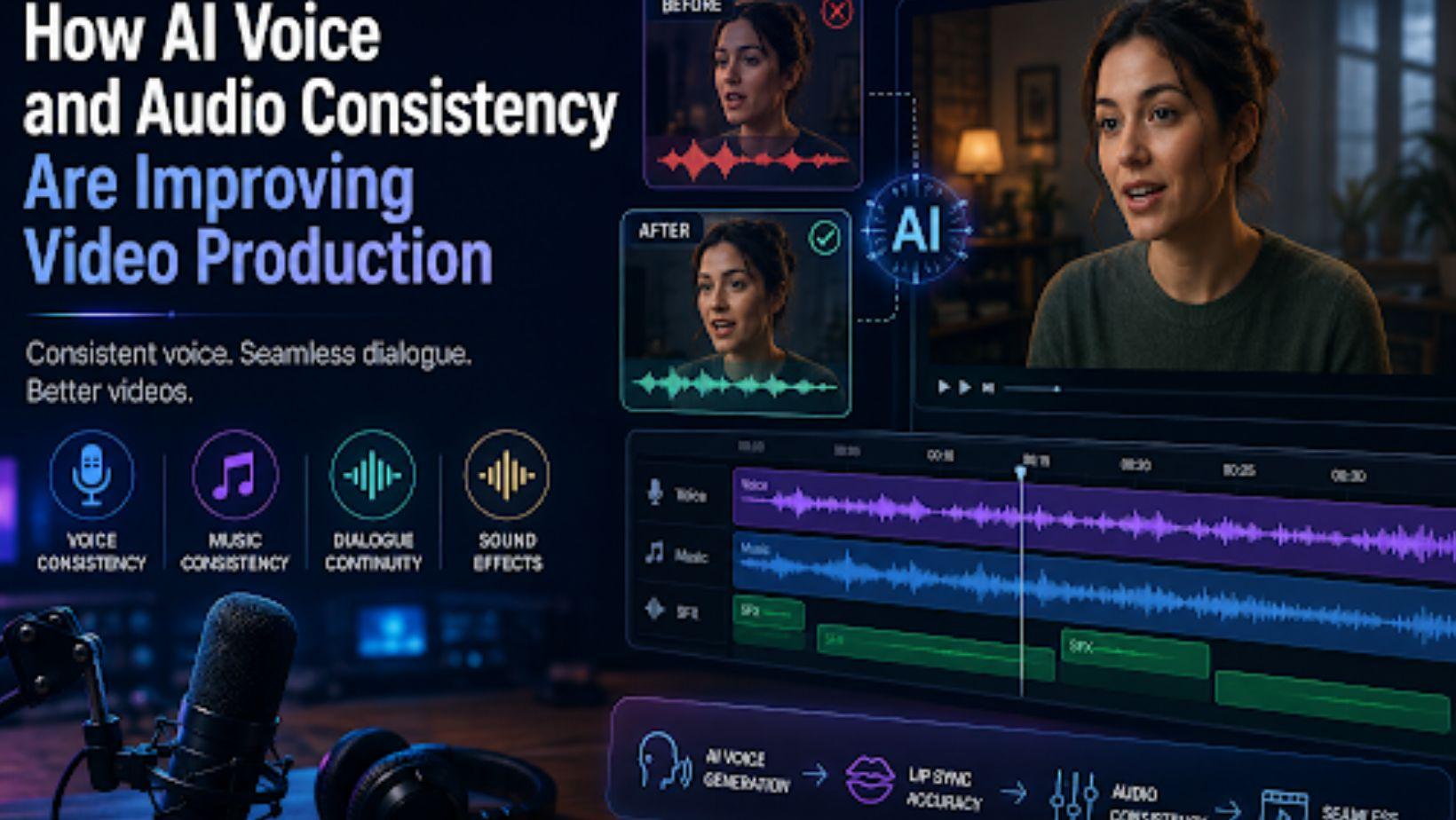
Audio has always been one of the most important parts of video production. A strong visual can lose impact if the voice changes between scenes, the music feels disconnected, or sound effects do not match the action on screen.
As AI video tools become more capable, creators are paying more attention to audio continuity. It is no longer enough to generate a voiceover or add a background track. The voice, music, dialogue, and sound design need to stay consistent across an entire project.
This is especially important for longer videos, branded campaigns, social content, explainers, and films where multiple scenes need to feel like part of the same production.
Why Audio Consistency Matters in Video Production
Viewers often notice inconsistent sound before they understand what is wrong.
A character may have a slightly different voice in another scene, music can suddenly change tone, or dialogue can sound like it was recorded in a different environment. These issues can make a video feel less polished.
Audio consistency helps maintain:
- Character identity
- Emotional tone
- Scene continuity
- Brand voice
- Production quality
When sound remains stable, viewers can focus on the story instead of being distracted by changes in voice or atmosphere.
Voice Consistency Helps Maintain Character Identity
Voice is a major part of how audiences recognize a character.
In AI-generated video, keeping the same voice across different scenes can be challenging. Changes in pitch, pacing, accent, energy, or pronunciation can make the same character feel like a different person.
AI voice tools are improving this by helping creators maintain a more stable vocal identity across multiple clips. Natural lip sync is equally important because even a realistic AI voice can feel unconvincing if facial movements do not match the dialogue. By keeping speech and mouth movements aligned, AI lip-sync technology helps digital characters appear more believable across multiple scenes, dubbed videos, and multilingual productions.
Tone and Delivery
A consistent character voice should maintain similar:
- Speaking pace
- Emotional range
- Accent
- Vocal tone
- Pronunciation style
This becomes especially important when the same character appears across a long video or a series of ads.
Voice Across Multiple Scripts
For brands and creators producing many videos, a recurring voice can become part of the identity of the content.
Instead of recording every script again, AI voice workflows can help maintain the same voice across new videos while changing the message.
Dialogue Continuity Makes Scenes Feel Connected
Dialogue continuity goes beyond using the same voice.
Characters should sound like they are speaking in the same world.
A conversation recorded in one room should not suddenly sound like it was generated in a completely different acoustic environment unless the scene has changed.
AI-assisted audio workflows can help manage:
- Dialogue volume
- Room tone
- Noise levels
- Vocal clarity
- Timing between speakers
These small details make scenes feel more natural when they are edited together.
Music Consistency Creates a Stronger Emotional Flow
Music helps control the emotional rhythm of a video.
A good soundtrack supports the story without drawing attention away from it. If the musical style changes too often, the video can feel fragmented.
AI music tools are making it easier to generate tracks that match a specific mood or creative direction.
Creators can maintain consistency through:
Repeated Musical Themes
Recurring melodies or instruments can connect different scenes.
Matching Energy Levels
Music can gradually build or reduce intensity depending on the story instead of changing abruptly.
Consistent Genre and Style
Keeping the same musical language helps maintain the identity of the project.
This is particularly useful in branded videos where the soundtrack should feel connected across several campaign assets.
Sound Effects Help Build a Believable Environment
Sound effects add depth to visual scenes.
Footsteps, doors, traffic, weather, product sounds, and environmental noise help viewers understand where a scene takes place.
AI-generated sound effects can support this process by helping creators fill audio gaps and match sound to on-screen action.
However, consistency matters.
If a product makes a different sound every time it appears, or the background environment changes unexpectedly, viewers may notice the difference.
A consistent sound design should consider:
- Environment
- Distance
- Perspective
- Material
- Scene intensity
These details help create a more believable world.
How AI Is Connecting Voice, Music, and Video Workflows
One of the biggest changes in AI video production is the move toward connected workflows.
Earlier tools often handled voice, music, visuals, and editing separately. Creators had to move between platforms and manually keep everything aligned.
Modern AI filmmaking systems are starting to bring these elements together.
Invideo Agent supports complete video workflows by helping creators move from ideas and scripting through visuals, voiceovers, music, editing, and post-production. This makes it easier to keep the creative direction of the video connected rather than treating audio as a separate final step.
For projects with multiple scenes, this kind of workflow can help maintain decisions around tone, character voice, pacing, and overall sound direction throughout production.
How Project Context Improves Audio Continuity
Audio consistency becomes harder as projects become longer.
A short social video may only need one voiceover and one music track. A longer production may include:
- Multiple characters
- Several locations
- Different emotional moments
- Voiceovers
- Dialogue scenes
- Music transitions
- Environmental sound
Keeping all of these elements aligned requires context.
This is where project memory becomes useful.
With invideo Agent Two, project memory and specialized creative agents can help carry creative decisions across more complex productions. That includes maintaining context around character choices, scene direction, and overall production style while different parts of the video are developed.
For audio-heavy projects, this can support a more consistent relationship between visuals, dialogue, music, and sound design.
AI Voice Generation Is Becoming More Natural
AI voices have improved significantly in areas such as pacing, emotion, and pronunciation.
Modern systems can produce speech that sounds more natural than earlier robotic voice generators.
This allows creators to generate:
- Narration
- Character dialogue
- Product explanations
- Social media voiceovers
- Localized versions of videos
The main advantage is not only speed. It is the ability to maintain the same voice identity across different content.
For brands, this can create a recognizable audio presence across multiple videos.
Localization Without Losing Voice Identity
Global video campaigns often require the same content in several languages.
Traditionally, this meant hiring different voice actors for every market. While that approach is still valuable, AI voice technology gives creators another option.
AI dubbing and voice cloning can help preserve aspects of the original speaker’s vocal identity while adapting dialogue into different languages.
This can help brands maintain:
- Similar tone
- Similar energy
- Consistent character identity
- Stronger campaign continuity
Localization becomes more effective when the translated version still feels connected to the original.
Audio Consistency Is Important for UGC and Social Video
Short-form content often moves quickly, but consistency still matters.
Brands creating many UGC ads may test different:
- Hooks
- Scripts
- Products
- Audiences
- Languages
Using the same recurring voice or audio style can help connect these variations.
A consistent sound identity can make campaigns feel more recognizable even when the visuals change.
This is especially helpful for brands producing large amounts of performance marketing content.
Common Audio Consistency Problems in AI Video
AI can make production faster, but creators still need to watch for common issues.
Changing Voice Characteristics
A voice can sound slightly different between generated clips.
Inconsistent Pronunciation
Names, products, and technical terms may be pronounced differently across scenes.
Music That Does Not Match the Scene
A track may fit one section but feel too energetic or too slow for another.
Unnatural Dialogue Timing
Characters may speak too quickly, pause at the wrong moments, or sound disconnected from the scene.
Sound Effects That Feel Added On
Effects need to match distance, movement, and environment to feel believable.
These issues can often be reduced by reviewing audio as part of the full video rather than treating each element separately.
Human Direction Still Matters
AI can generate voices, music, and sound effects, but creative decisions still need human direction.
Editors and filmmakers decide:
- When music should enter
- When silence is more effective
- How emotional a voice should sound
- Whether a sound effect supports the scene
- How dialogue should flow
Good audio production is not about adding more sound. It is about choosing the right sound at the right moment.
AI works best when it helps creators make those decisions faster and more consistently.
The Future of AI Audio in Video Production
AI audio is moving toward deeper integration with video creation.
Instead of generating visuals first and adding sound later, future workflows will increasingly develop both together.
This could lead to:
- More natural dialogue
- Better sound-to-action matching
- Consistent character voices
- Smarter music transitions
- More realistic environmental audio
As video generation becomes more advanced, sound continuity will become just as important as visual consistency.
Final Thoughts
Strong video production depends on more than what audiences see.
Voice, music, dialogue, and sound effects all shape how a story feels. When these elements remain consistent, videos become more immersive and professional.
AI is helping creators manage this continuity by making it easier to maintain character voices, match music across scenes, generate sound effects, and connect audio decisions with the rest of the production workflow.
As AI video tools continue to evolve, the strongest results will come from workflows that treat sound and visuals as one connected creative system rather than separate parts of the process.









Discussion about this post