

If you’re building AI apps, you’ve probably come across Baseten. It’s a popular platform for deploying and serving AI models, but it’s definitely not the only option out there.
Depending on what you need, another platform might offer better pricing, lower latency, wider global coverage, or features that fit your workflow better. But it might be confusing to truly find a platform that offers all the things you need.
So in this guide, we’ll compare three of the best Baseten alternatives in 2026 to help you do just that: Telnyx, Fireworks AI, and Groq.
Quick Comparison
|
Platform |
Best For |
Standout Feature |
OpenAI-Compatible |
|
Telnyx |
Global AI deployments |
Global inference on owned GPU infrastructure |
✅ Yes |
|
Fireworks AI |
Flexible model deployment |
Large selection of open-source models |
✅ Yes |
|
Groq |
Real-time AI |
Extremely fast inference speeds |
✅ Yes |
Telnyx
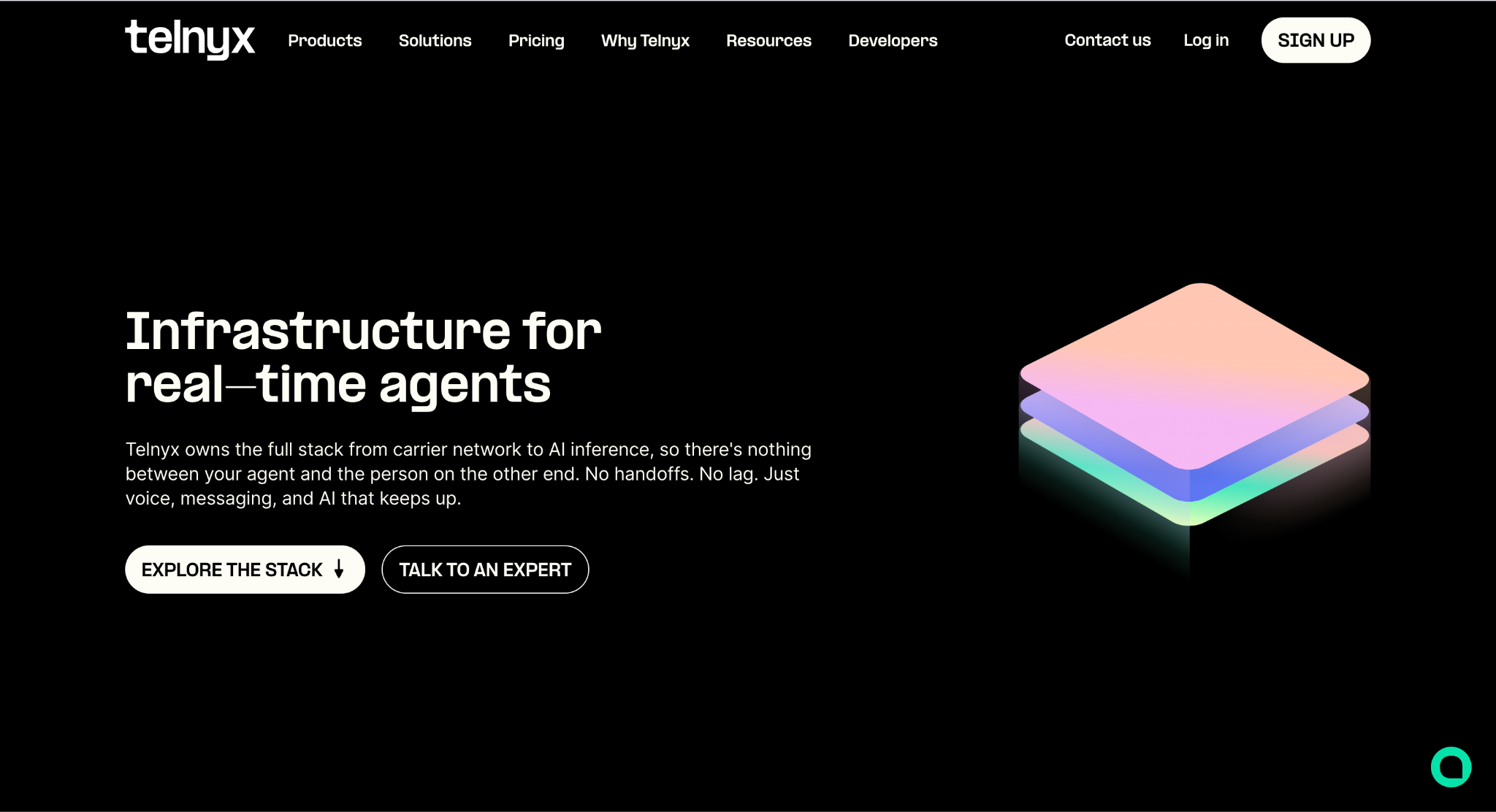
If you want an inference platform that’s easy to use, scales well, and works across different regions, Telnyx is one of the best alternatives to Baseten.
One thing that makes Telnyx stand out is that it owns its GPU infrastructure instead of relying entirely on third-party cloud providers. That helps keep costs down while giving businesses more control over where their AI workloads run.
The platform currently supports models like GLM-5.2, Kimi K2.5/K2.6, MiniMax M3, and Qwen3, and they’re all available through OpenAI-compatible APIs. If you’re already using the OpenAI SDK, switching is straightforward—you typically just change your base URL instead of rebuilding your application.
Telnyx also includes plenty of features that are useful for production AI applications, including:
- Global in-region deployments across the Americas, Europe, MENA, and APAC
- Function calling
- Structured JSON outputs
- Automatic autoscaling
- Model fine-tuning
- Transparent pricing starting at $0.21 per 1 million tokens
Another nice bonus is that inference isn’t the only thing Telnyx offers. The platform also includes Voice AI, speech services, text-to-speech, and telephony, so teams building conversational AI can keep everything on one platform instead of juggling multiple providers.
Pros
- OpenAI-compatible API
- Global deployments for lower latency
- Function calling and structured outputs
- Fine-tuning support
- Transparent pricing
- Voice AI and communications built in
Cons
- Some features may be more than smaller projects need
Fireworks AI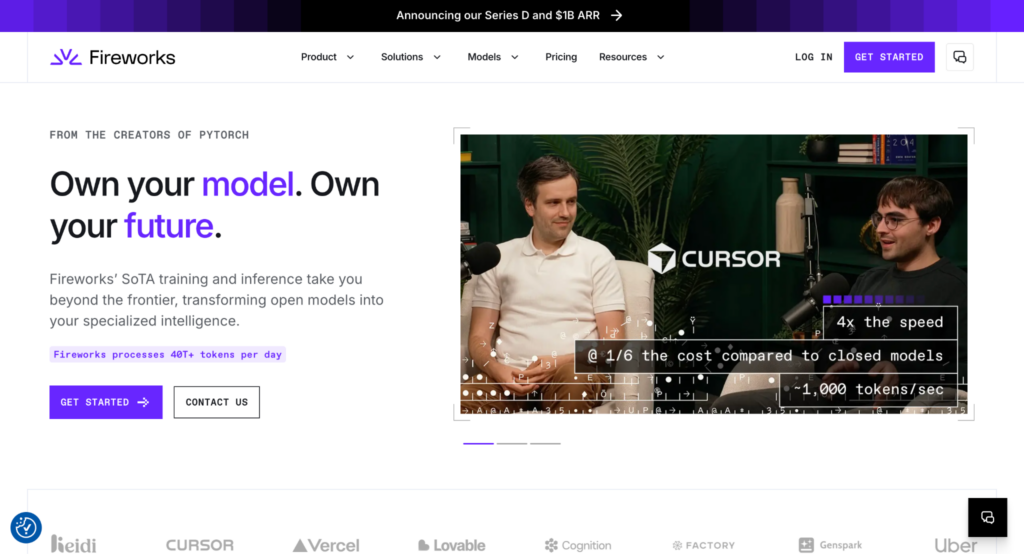
Fireworks AI is another excellent Baseten alternative, especially if you work with open-source models.
The platform offers serverless inference as well as dedicated deployments, giving developers the flexibility to start small and scale when needed.
One of Fireworks AI’s biggest strengths is its model library. It supports many popular open-source models, including models from Llama, Mistral, Qwen, DeepSeek, and other leading model families. Like Telnyx, it also offers OpenAI-compatible APIs, making migration much easier for existing applications.
Fireworks AI also includes useful production features like function calling, structured outputs, embeddings, and support for fine-tuning on selected models.
Overall, it’s a great option if you want access to lots of different models without having to manage your own infrastructure.
Pros
- Large selection of open-source models
- Serverless and dedicated deployments
- OpenAI-compatible API
- Production-ready inference
- Supports function calling
Cons
- Pricing depends on the model you choose
- Doesn’t include built-in communications features like Telnyx
Groq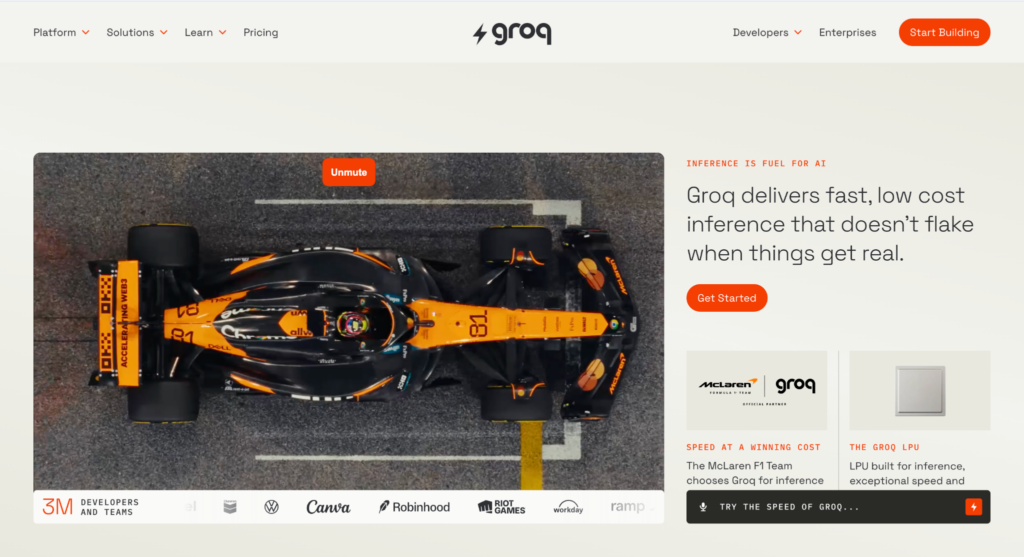
If speed is your biggest priority, Groq is a good option.
Unlike most inference providers that rely on GPUs alone, Groq developed its own custom hardware specifically for AI inference. The result is extremely fast response times, making it a popular choice for chatbots, coding assistants, voice applications, and other real-time AI experiences.
Groq also supports OpenAI-compatible APIs, so developers can integrate it without making major changes to existing applications.
The platform continues expanding its inference cloud globally, making it a solid option for businesses that need reliable performance at scale.
While Groq focuses more on inference than broader AI tooling, it’s one of the fastest platforms currently available for production workloads.
Pros
- Extremely fast inference
- Excellent for real-time AI
- OpenAI-compatible API
- Built specifically for inference
Cons
- More focused on speed than full AI workflows
- Smaller hosted model selection than some competitors
What to Look for in an AI Inference Platform
Here are a few things worth thinking about before choosing an AI Inference Platform.
- Speed
If you’re building chatbots, AI agents, or voice applications, fast response times can make a huge difference to the user experience.
- Model Selection
Some platforms offer a handful of carefully chosen models, while others give you access to a much bigger library. Make sure the models you want to use are available.
- Easy Integration
Many platforms now support OpenAI-compatible APIs, which means you can often switch providers with very little work. That can save a lot of development time.
- Scalability
As your app grows, your inference platform should be able to handle more traffic without you having to worry about managing servers or GPUs.
- Pricing
It’s always worth comparing pricing before making a decision. Some providers charge only for the tokens you use, while others may have additional deployment or infrastructure costs.
Which One’s the Best?
There are plenty of great Baseten alternatives available today, and the right one comes down to what you’re looking for.
If you want an easy-to-use platform with global deployments, transparent pricing, and extra features like Voice AI, Telnyx is a great all-around choice. Fireworks AI is a good fit if you want access to a wide range of open-source models, while Groq stands out for its incredibly fast inference.
Whichever platform you choose, comparing a few options before making a decision is always worth it. Each one has its own strengths, so the best choice is the one that fits your workflow and your budget.








Discussion about this post