

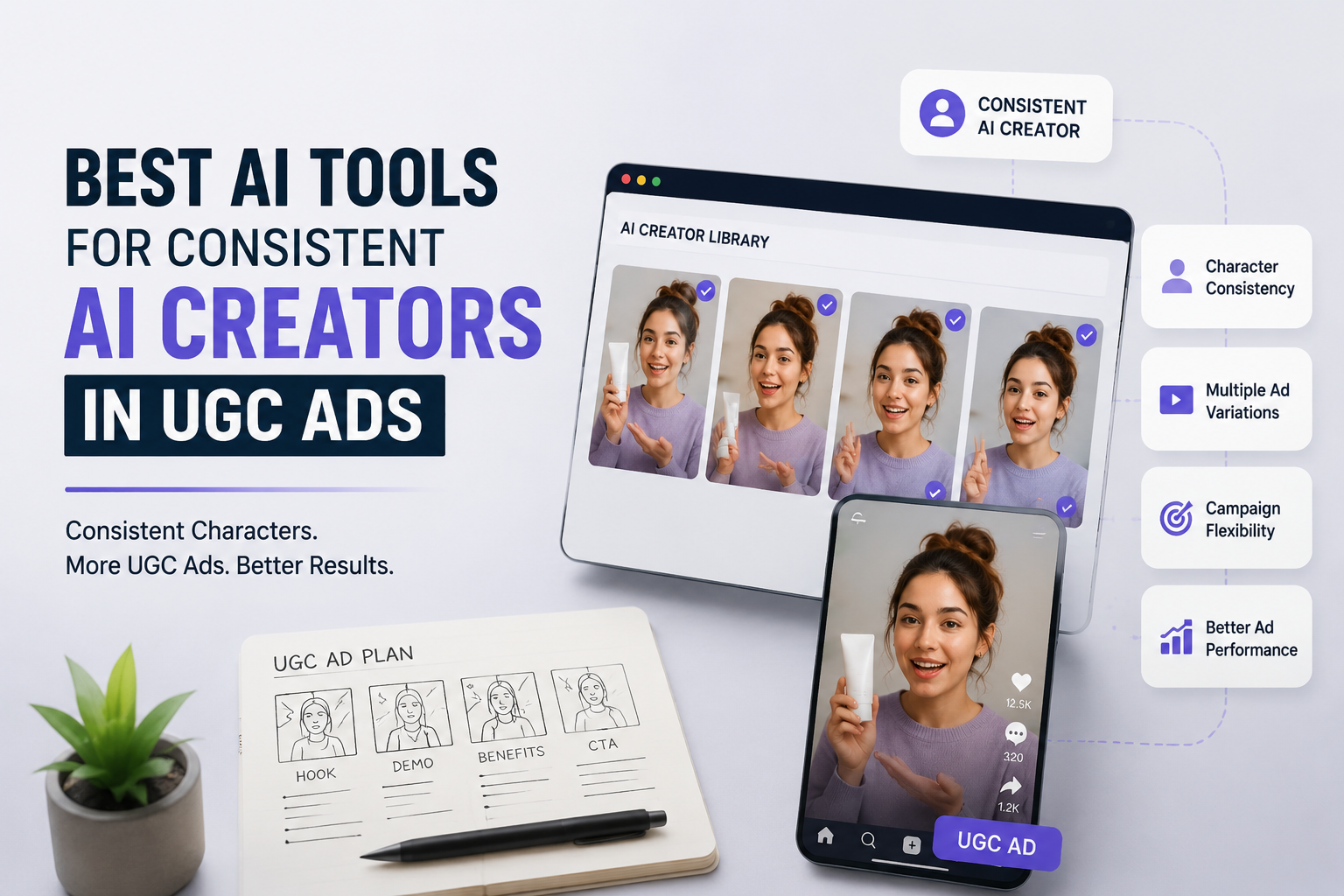
User-generated content (UGC) ads have become one of the most effective formats for brands looking to build trust and drive conversions. Unlike traditional advertisements, UGC-style videos feel more personal, relatable, and closer to everyday customer experiences.
However, scaling UGC ads can be challenging. Brands often need dozens or even hundreds of creative variations for different audiences, products, platforms, and campaigns. Working with multiple creators can increase production time, while maintaining the same messaging, visual style, and brand identity across every video can become difficult.
AI is changing how brands approach UGC production by introducing digital creators and AI-powered characters that can appear across multiple videos. Instead of creating every asset from scratch, brands can develop consistent AI creators that maintain the same appearance, personality, and presentation style across different campaigns.
The challenge is not simply generating an AI creator once. The real challenge is maintaining consistency across multiple scenes, scripts, products, and ad variations.
Modern AI video tools are helping solve this by supporting character consistency, AI-generated performances, product storytelling, and scalable UGC ad production.
Why Character Consistency Matters in AI UGC Ads
A successful UGC creator is recognizable. Audiences connect with the person delivering the message, their personality, style, and overall presence.
The same principle applies to AI creators.
If an AI-generated person looks different in every video, changes facial features, or has inconsistent expressions, it can reduce trust and make the content feel artificial.
Character consistency involves maintaining:
- Facial features and identity
- Hairstyle and appearance
- Clothing style
- Voice and speaking patterns
- Expressions and body language
- Overall creator personality
For brands using AI creators in advertising, maintaining these elements helps create a familiar presence that audiences can recognize across multiple campaigns.
How AI Creators Are Changing UGC Advertising
Traditional UGC campaigns often depend on finding creators, arranging shoots, reviewing footage, and producing multiple edits. While human creators remain valuable, this process can become difficult when brands need a large volume of content.
AI creators provide another approach by allowing brands to develop repeatable digital personalities that can be used across different campaigns.
Brands can use AI creators for:
- Product demonstrations
- Customer-style testimonials
- Social media advertisements
- Product comparisons
- Feature explanations
- Localized campaigns
The goal is not to remove creativity from UGC. Instead, AI helps brands create more content while maintaining control over consistency and messaging.
Best AI Tools for Creating Consistent AI Creators in UGC Ads
1. Invideo Agent
Invideo Agent is an AI video creation platform designed to help brands move from a creative idea to a complete video campaign. Instead of focusing only on generating individual clips, it supports different stages of production, including concept development, scripting, visual planning, generation, editing, and refinement.
For brands creating UGC ads, this connected approach is useful because campaigns often require multiple videos featuring the same AI creator, product, and brand message. Maintaining consistency across these assets is important for building recognition and trust.
Invideo Agent helps teams develop repeatable creative workflows where AI creators, visual styles, storytelling approaches, and campaign direction can remain aligned across different videos. This makes it easier to create multiple ad variations without losing the identity of the original concept.
For larger campaigns, invideo Agent Two adds more advanced creative coordination by helping teams manage complex projects involving multiple scenes, characters, and production elements. It supports creative areas such as visual planning, cinematography, story development, and effects, helping teams maintain a consistent direction when producing larger volumes of UGC-style content.
Key Features:
- Creates UGC-style videos from ideas, briefs, and scripts
- Helps maintain character and visual consistency
- Supports product-focused storytelling
- Enables multiple video formats for campaigns
- Connects planning, creation, editing, and refinement
Best For:
- Ecommerce brands scaling UGC campaigns
- Marketing teams producing multiple creatives
- Brands building recurring AI creators
- Performance marketers testing ad variations
Where It Falls Short:
invideo Agent works best for teams looking for a complete video creation workflow. Brands focused only on creating simple talking-avatar videos may prefer specialized avatar-only platforms.
2. HeyGen
HeyGen is an AI video platform focused on creating videos with digital avatars and AI presenters. It is widely used by businesses that need consistent on-screen personalities for marketing, training, communication, and social content.
For UGC advertising, HeyGen allows brands to create videos using AI presenters who can deliver different scripts while maintaining the same avatar identity. This can be useful for brands that want a recognizable digital spokesperson who can appear across multiple campaigns without recording every video manually.
The platform helps simplify presenter-based content creation by combining avatar generation, voice technology, and script-driven video production. For ecommerce brands, this can support product demonstrations, feature explanations, and promotional videos where the focus is on a person communicating a message.
Key Features:
- AI-generated digital presenters
- Voice cloning and AI voice options
- Multilingual video creation
- Script-to-video workflows
- Custom avatar experiences
Best For:
- Presenter-led UGC advertisements
- Product explainers
- Global marketing campaigns
- Educational brand content
Where It Falls Short:
HeyGen is highly effective for presenter-based videos but may feel limited for brands looking to create more cinematic UGC ads with custom environments, complex storytelling, or highly detailed character-driven scenes.
3. Synthesia
Synthesia is an AI video platform designed around digital presenters and professional avatar-based content. It is commonly used by businesses for training, internal communication, product education, and marketing videos that require a consistent spokesperson.
For UGC-style campaigns, Synthesia can help brands create repeatable videos where the same AI presenter explains products, introduces services, or delivers promotional messages. This consistency can be valuable for companies creating large amounts of educational or informational content.
While traditional UGC often focuses on casual creator-style storytelling, Synthesia provides a more controlled and polished approach. Brands can maintain a consistent presenter identity while adapting scripts for different audiences, regions, or product messages.
Key Features:
- AI presenter videos
- Digital avatar library
- Multiple language support
- Script-based video generation
- Professional presentation templates
Best For:
- SaaS and technology brands
- Product education videos
- Corporate marketing content
- Global communication campaigns
Where It Falls Short:
Synthesia is better suited for structured presenter content rather than authentic influencer-style UGC. Brands looking for casual creator personalities, lifestyle scenes, or emotional storytelling may need additional creative tools.
4. Runway
Runway is an AI video creation platform focused on generative video, creative editing, and visual storytelling. Unlike traditional avatar platforms, Runway is designed more around creating unique visual experiences, cinematic scenes, and AI-generated environments.
For UGC advertising, Runway can help brands experiment with AI-generated creators, lifestyle scenes, and visually engaging product campaigns. It is useful when brands want their content to feel more creative and visually distinctive rather than following a standard presenter format.
The platform gives creative teams more flexibility to explore different characters, environments, and visual styles. This makes it valuable for brands that want to combine UGC-inspired storytelling with stronger cinematic elements.
Key Features:
- AI video generation
- Generative editing tools
- Image-to-video creation
- AI-powered visual effects
- Creative scene generation
Best For:
- Creative advertising campaigns
- Brand storytelling
- Lifestyle product videos
- Experimental UGC content
Where It Falls Short:
Runway provides strong creative freedom but is not specifically designed for maintaining a single AI creator identity across many campaigns. Brands may need additional processes to manage character continuity.
5. Arcads
Arcads is an AI advertising platform focused on creating UGC-style advertisements using AI actors. It is designed for brands and performance marketers who want to produce creator-style ads without depending entirely on traditional influencer production.
For UGC campaigns, Arcads helps brands generate videos where AI actors deliver scripts, product messages, and promotional content. This approach allows teams to test different advertising angles while maintaining a consistent creator-style format.
The platform is particularly focused on conversion-driven campaigns where marketers need multiple creative variations to understand what works best with different audiences. It helps reduce some of the production challenges associated with creating large volumes of UGC advertisements.
Key Features:
- AI actors for UGC ads
- Script-based advertisement creation
- Creator-style video formats
- Multiple creative variations
- Performance marketing workflows
Best For:
- Ecommerce advertising teams
- Paid social campaigns
- Direct-response marketing
- Creative testing workflows
Where It Falls Short:
Arcads is focused primarily on UGC advertising and performance campaigns. Brands looking for broader filmmaking workflows, advanced storytelling, or detailed scene development may require additional tools.
6. Creatify
Creatify is an AI video advertising platform built around helping businesses create marketing videos from product information. It focuses on turning product details into advertising creatives that can be used across ecommerce platforms and social channels.
For brands creating AI-driven UGC ads, Creatify can help transform product information into videos featuring AI presenters and marketing-focused formats. This makes it useful for businesses that need to quickly create multiple versions of product advertisements.
The platform is especially helpful for ecommerce teams that want to test different product messages, creative approaches, and advertising formats without investing heavily in traditional production processes.
Key Features:
- Product-to-video creation
- AI presenter videos
- Advertisement templates
- Creative variation generation
- Social media video formats
Best For:
- Ecommerce brands
- Product advertising campaigns
- Small marketing teams
- Social media advertisers
Where It Falls Short:
Creatify is optimized for fast ad production but may not provide the same level of character development and long-term AI creator consistency needed for brands building recurring digital personalities.
How Brands Can Maintain Consistent AI Creators Across Campaigns
Creating a successful AI creator requires more than generating a realistic face. Brands need to establish a clear identity that can continue across multiple videos.
This includes maintaining consistency in appearance, personality, voice, and storytelling style.
A strong AI creator should feel like the same individual whether they are introducing a new product, creating a testimonial-style video, or appearing in a social media campaign.
AI workflows that maintain creative context can help brands avoid rebuilding characters every time they create a new advertisement.
AI Creators and the Future of UGC Advertising
AI creators are becoming an important part of how brands approach scalable video advertising. They allow marketing teams to experiment with more ideas, create more variations, and maintain consistency across campaigns.
However, successful UGC ads still depend on strong storytelling. Audiences connect with authenticity, clear messaging, and relatable experiences.
AI creators work best when they support creative strategy rather than replace it.
Final Thoughts
Creating consistent AI creators for UGC ads is becoming increasingly important as brands look for faster ways to produce high-quality video content.
The biggest challenge is not generating an AI character. It is maintaining that character’s identity across multiple videos, campaigns, and platforms.
AI video tools are helping brands solve this challenge by supporting character consistency, scalable production, and repeatable creative workflows.
As AI-powered advertising continues to evolve, brands that combine consistent digital creators with strong storytelling will have new opportunities to create engaging and personalized UGC campaigns at scale.










Discussion about this post